A minor undetected issue in your PCB can lead to costly recalls, product failure, and damage to your brand reputation. That is why PCB testing has become one of the most important steps in modern electronics manufacturing. As electronic devices continue to become smarter, faster, and more compact, manufacturers need reliable testing solutions to identify defects at an early stage.
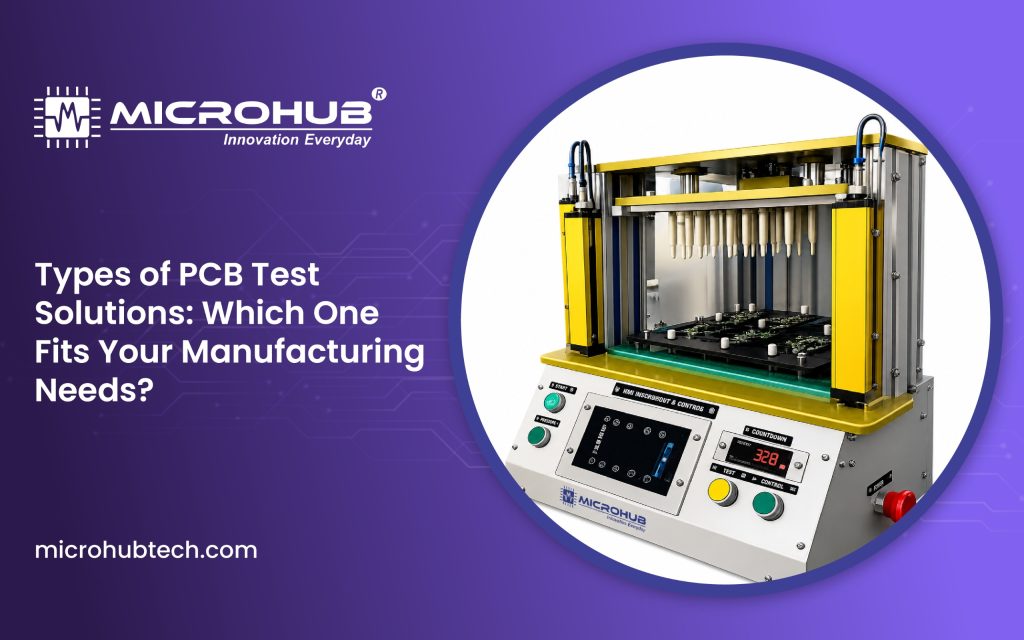
With the help of advanced PCBA test fixtures, manufacturers can thoroughly test their products before they reach the market and ensure better quality, performance, and reliability. However, choosing the right PCB testing solution depends on your manufacturing requirements, production volume, and product complexity. Read this blog to understand different PCB testing methods and determine the best testing approach for your electronic products.
Different Types of PCB Testing Methods
Depending on your purpose and manufacturing needs, you have to choose the right PCB test solutions.
Automated Optical Inspection
AOI involves using high-resolution cameras to check PCBs for potential visual defects after or during assembly. While conducting the inspection, you have to find misaligned and missing components, polarity, and incorrect component placement.
Automated optical inspection allows a faster solution and non-contact testing. But you may not be able to check the electrical performance.
In-circuit Testing
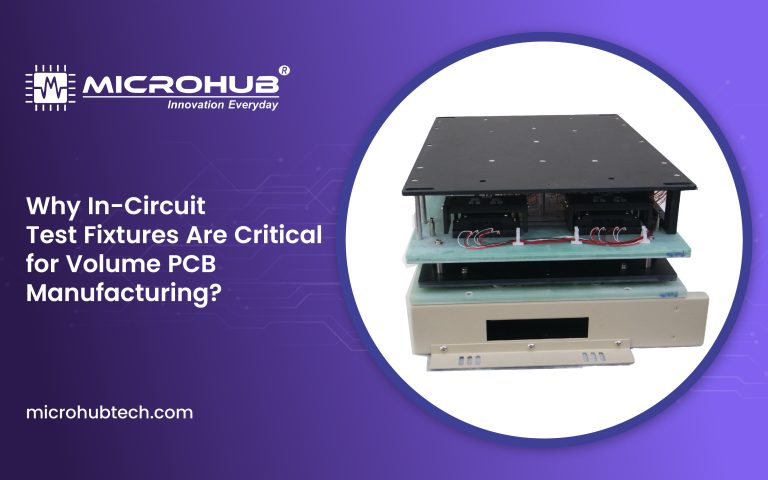
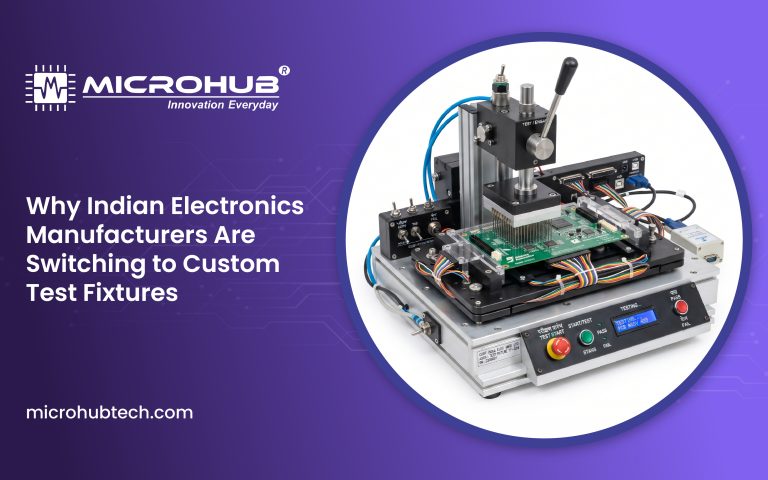
ICT is one of the comprehensive testing methods for PCBs. You have to use a bed-of-nails fixture to facilitate electrical contact with the board’s test points. In-circuit tests are effective at detecting open circuits, missing components, and short circuits.
The biggest advantages of in-circuit testing are excellent repeatability, higher upfront investment, and high fault coverage. However, you need custom fixtures to conduct the ICT method. Although the upfront investment is high, you will get the best value.
Many electronic product manufacturers choose this testing solution for the mass production environment, where throughput and higher accuracy are essential.
Flying Probe Testing
Flying probe testing is another method that conducts electrical tests with movable probes. It is intended for detecting component placement issues and electrical connectivity problems.
You need no custom fixtures to conduct flying probe testing methods. What’s more, the setup cost for this testing solution is low. If you want to frequently adjust the PCB’s design, flying probe testing is the best option.
But one demerit of the process is that it is slower than ICT. Some manufacturers do not rely on it for high-volume production. For low-volume manufacturing and prototype development, you can choose flying probe testing.
Functional Testing
In the last production phase, manufacturers conduct functional tests for quality control. The testing process ensures that the electronic device will function as expected.
Depending on the design complexity, functional testing can be a simple solution. It is a more convenient and cheaper option for electronic product manufacturers.
How to Select PCB Testing Methods?
The choice of testing procedure depends on several manufacturing factors.
- Production volume- For high-volume and medium-volume production, ICT is the best option.
- Product complexity- If it is a simple PCB, choose the flying probe. But, for mission-critical electronics, functional testing and ICT are the right alternatives.
- Your budget- The flying probe testing process involves a low initial investment. But for your long-term, high-volume efficiency, you need to rely on ICT.
So, identify your needs and make a deal with the PCBA test fixtures Manufacturer.
Emerging PCB Testing Trends
Data-driven quality control and automation will shape the future of PCB testing. Smart factory integration and AI-based defect detection are other trends in the PCB manufacturing industry.
Conclusion
Choosing the right PCB testing solution helps improve product quality, reduce manufacturing errors, and ensure reliable electronic performance. Whether you need AOI, ICT, flying probe testing, or functional testing, the ideal method depends on your production requirements and product complexity.
For reliable and high-quality PCBA test fixtures, Microhub offers solutions designed for both prototype development and high-volume manufacturing needs.